One honest question, their own writing, and two short readings that know where they are. Then it ends and says so.
Fourteen days free. No card, no account.
Most apps are built to keep you. This one is built to let you go, which is the only honest shape for something a teenager opens after practice.
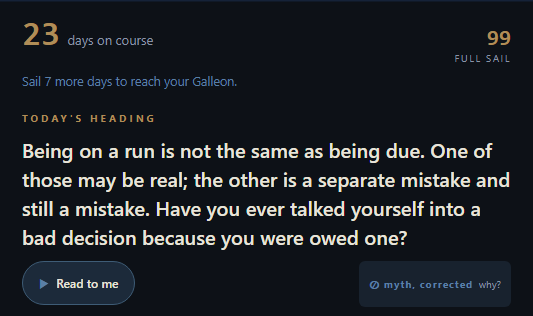
One question they can answer about their own life, in two or three sentences.
Nobody reads it. It stays on the phone.
Picked for their sport, their age, and where they are right now. Not a feed. Two.
The app says the day is done, because it is.
The useful range was roughly 25 to 90 minutes, early afternoon rather than straight after midday. What is the honest obstacle to that on a school day, and is any of it moveable?
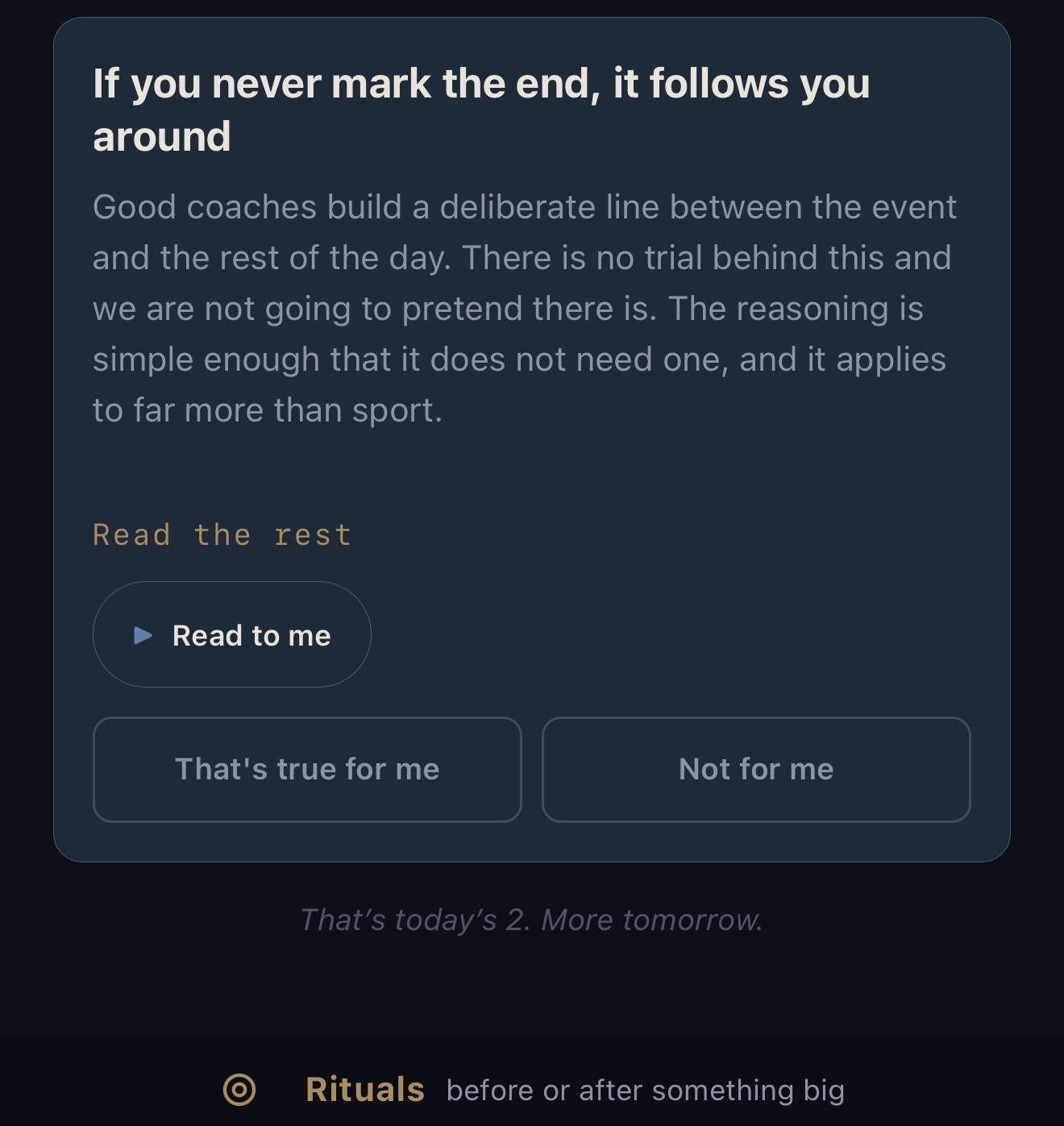
That's today's 2. More tomorrow.
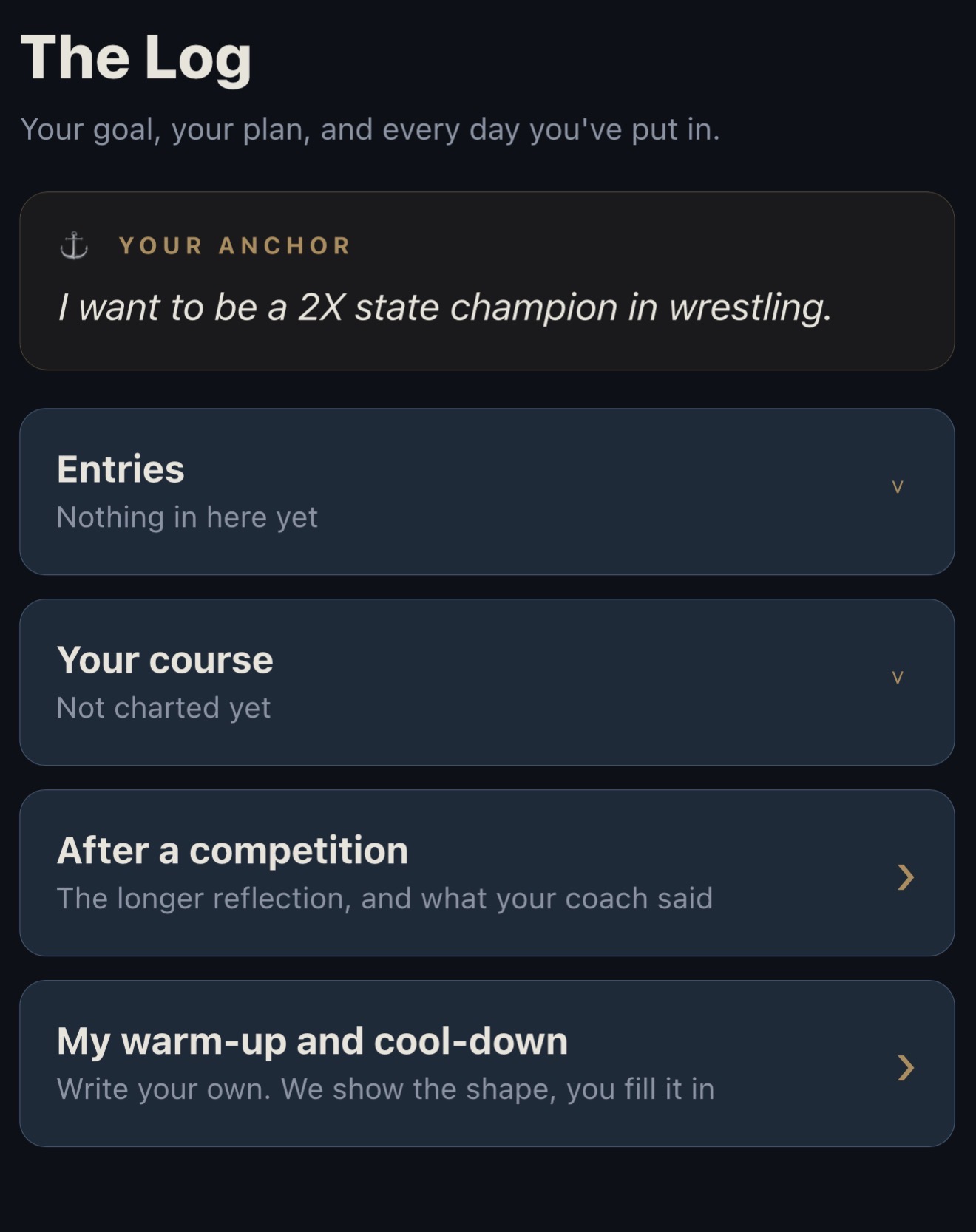
The Log. Their goal at the top, always, then every day they have put in. Nobody else can open this.
A reading. Look at the third sentence: "There is no trial behind this and we are not going to pretend there is." That is the app talking about its own evidence, in the app, to a fifteen-year-old.
Each item is labeled research‑backed, from the field, or worth trying. Where the evidence is weak, the app says the evidence is weak. They are never asked to take anybody's word for anything, and neither are you.
Some athletes have a coach who will sit with them for ninety minutes after they go 0 and 8. A sports psychologist. A parent who competed. Most have none of that. The gap between those two kids is not talent and it is not effort. It is access.
Fourteen days free before either. No card and no account to start, because the person trying it is usually not the person with the card. Fourteen days is one full program, which is long enough to know.
There is no free tier and no locked half, and that is deliberate. An app with something left to sell you has a reason to interrupt you. We would rather not have the reason.
Nobody reads what they write. Not us, not their coach, not their school, and not you. It is not a privacy setting we could quietly change our minds about; their writing stays on their phone and never reaches us. No ads, nothing sold. It is not a medical or mental health product: it does not diagnose or treat anything, and it never promises anyone will win.
Write to support@ikariapp.org and we will send a code. No explanation needed and nobody is told. Programs and clubs can cover a whole room for a season, and the athletes keep their privacy either way: no dashboard, no coach view, not ever.

Open it on the phone they actually use.
In Safari, tap Share then Add to Home Screen. That step is what keeps their writing safe on the phone.